
New York City has one of the most competitive food truck scenes in the country. On any given block in Midtown, Williamsburg, or the Financial District, a dozen trucks compete for the same lunch crowd. In that environment, your truck’s appearance isn’t just branding — it’s survival.
A professionally designed food truck wrap is the single most cost-effective marketing investment a food truck owner can make. It turns your vehicle into a rolling billboard that works 24 hours a day, 7 days a week, across every neighborhood you park in. This guide covers everything you need to know: types of wraps, design principles, the business case, and how to protect your investment.
What Is a Food Truck Wrap?
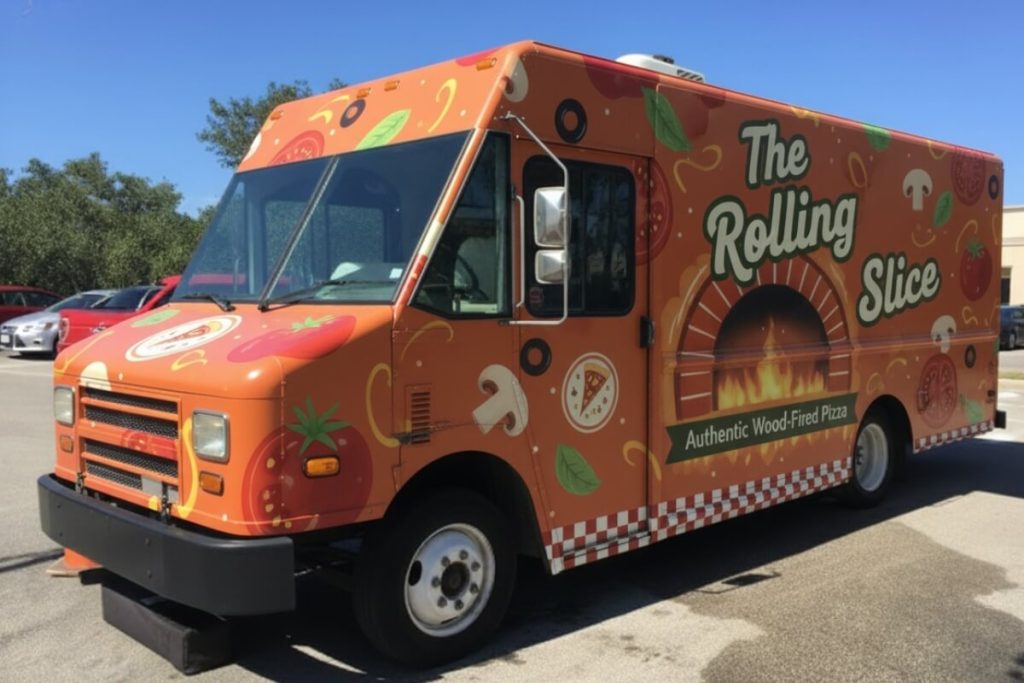
A food truck wrap is a large-format vinyl graphic that is applied directly to the exterior surface of your vehicle. The vinyl bonds to the truck’s body panels and can cover the entire vehicle, specific panels only, or just selected areas with lettering and graphics.
Unlike paint, vinyl wraps are:
- Removable — when you want to rebrand, the wrap comes off without damaging the vehicle’s original paint
- Updatable — you can modify or replace sections without wrapping the entire truck
- Protective — high-quality vinyl protects the underlying paint from UV fading, minor scratches, and debris
- Full-color — any design, photograph, or illustration can be reproduced at full vehicle scale
Types of Food Truck Wraps
Full Wrap
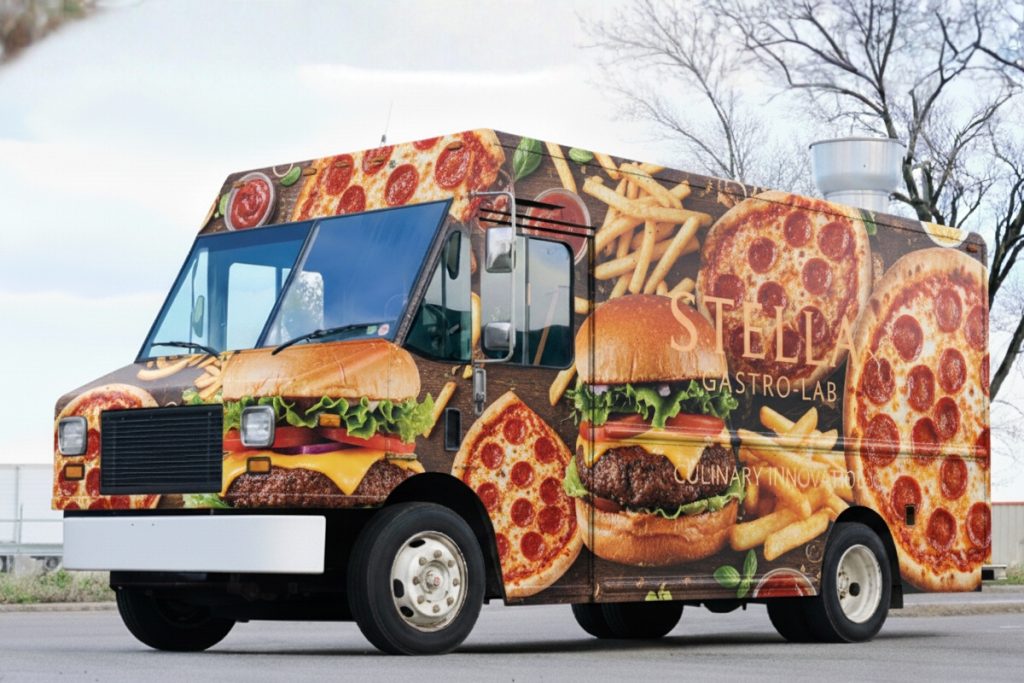
A full wrap covers your truck’s entire exterior surface — all body panels, doors, and visible flat surfaces. This is the highest-impact option and provides the most surface area for branding, menu display, and visual storytelling. Full wraps also provide the best paint protection against UV damage, minor scratches, and weathering — especially important for trucks operating year-round in NYC.
Partial Wrap
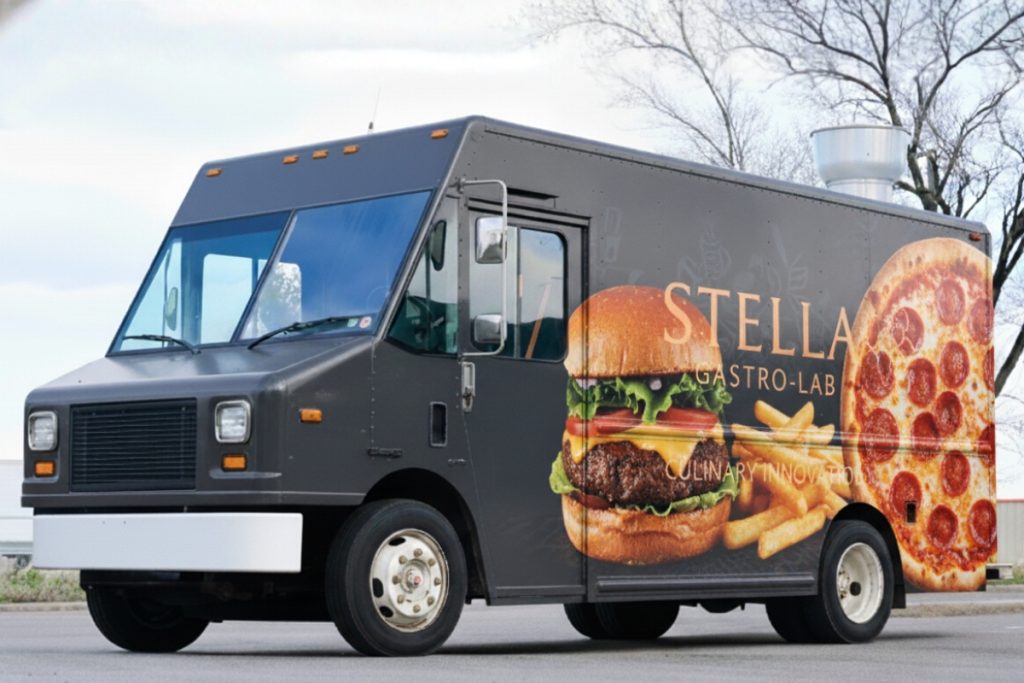
A partial wrap covers specific sections of the truck — typically the side panels or the rear. This is a good option if you want significant visual impact at a lower price point, or if your truck already has a base color that works with your brand. Partial wraps are often used to add a menu, contact information, or a key brand graphic without a full redesign.
Truck Lettering
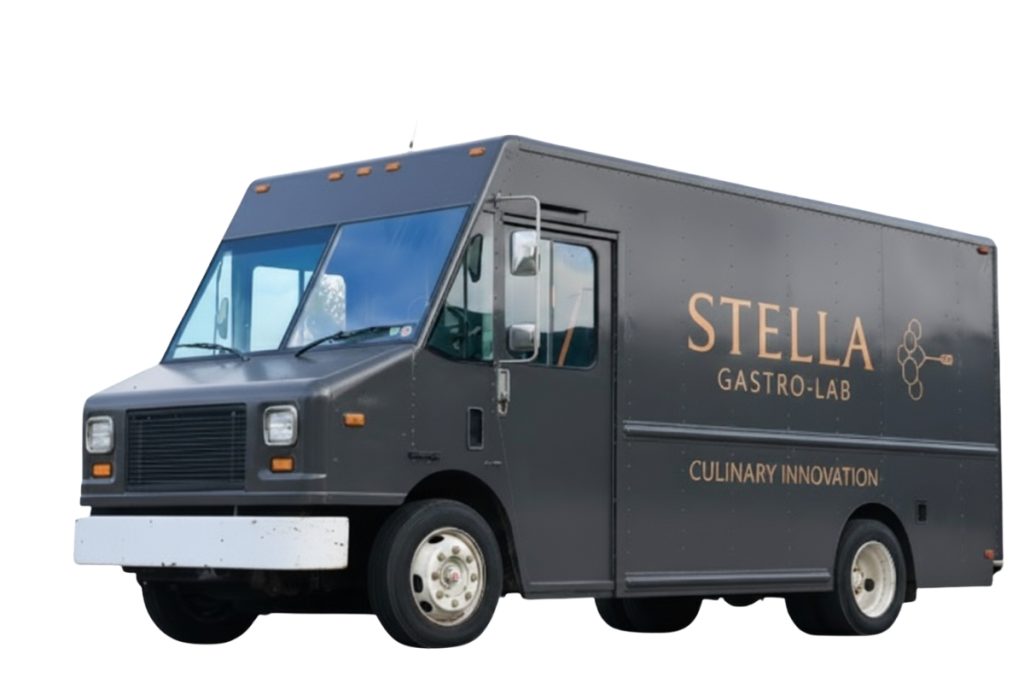
Vinyl lettering is the most affordable option — individual cut-vinyl letters and simple graphics applied directly to the truck’s surface. This is ideal for trucks that want to maintain a clean, minimalist look while displaying business name, phone number, social handles, and website. High-quality vinyl lettering can last 5–7 years with proper care.
The Business Case for Food Truck Wraps — 10 Reasons They Work
1. 24/7 Advertising at Zero Ongoing Cost
Your wrap works around the clock — parked overnight in your lot, driving to your spot, or sitting in traffic. Unlike digital ads or print campaigns, there’s no recurring media cost. You pay once, and your truck keeps advertising for years.
2. One-Time Investment, Multi-Year Returns
A quality commercial vehicle wrap typically lasts 5–7 years with proper maintenance. Amortized over that period, the cost-per-impression is a fraction of any other advertising channel available to a small business.
3. Stand Out in a Crowded Market
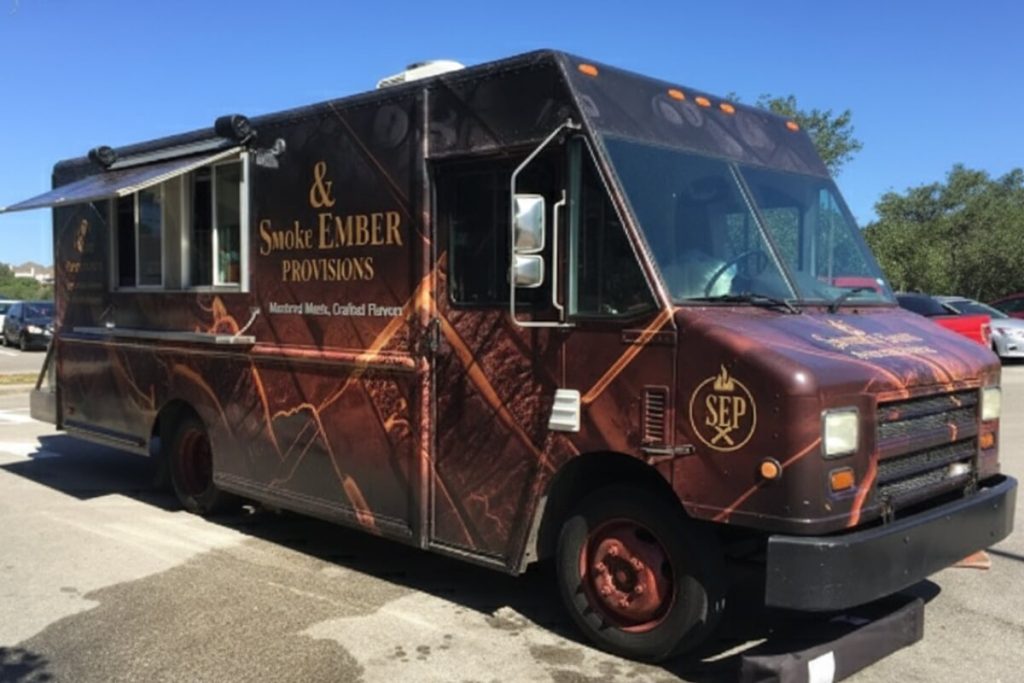
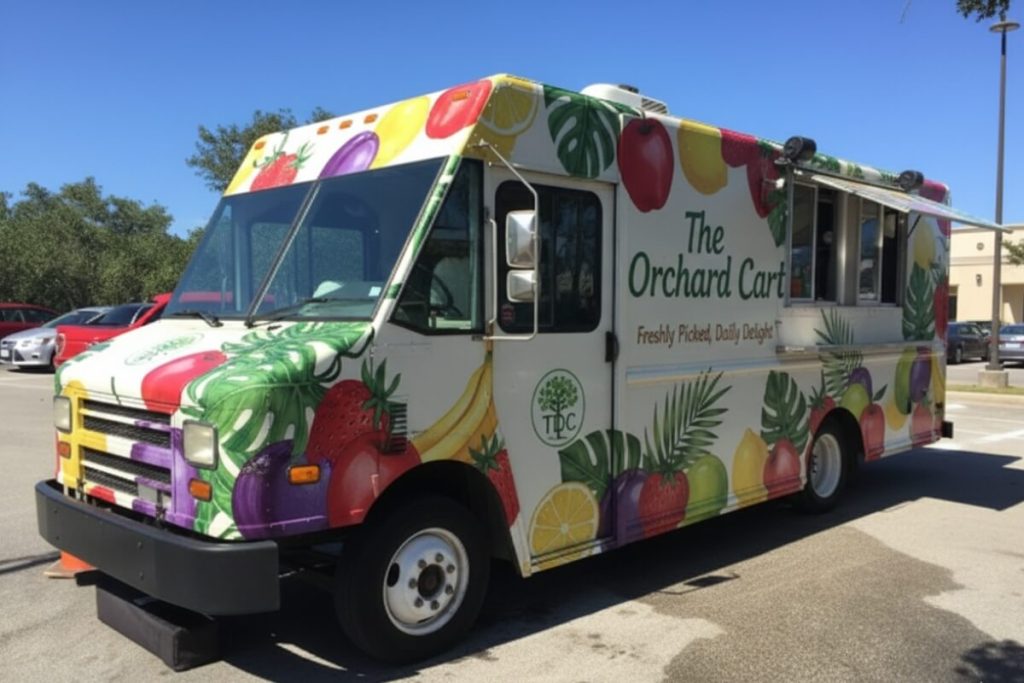
In NYC’s food truck ecosystem, visual differentiation is everything. A well-designed wrap makes your truck instantly recognizable from half a block away — before a customer has read your menu, your brand is already working on them.
4. Professional Credibility
Customers make snap judgments about food quality based on visual presentation. A polished, professional wrap signals that you care about your product and your customer experience. It builds the trust that turns first-time visitors into regulars.
5. Establishes Brand Identity
A wrap with your logo, brand colors, and visual style is the foundation of your brand identity on wheels. It’s what makes you recognizable when you park in a new neighborhood, when you appear in someone’s photo on Instagram, or when a food blogger reviews you.
6. Built-In Menu Display
One of the most practical benefits: your wrap can display your menu, prices, and featured items directly on the vehicle. This reduces the workload on your staff (no need to repeat the menu verbally to every customer) and pre-qualifies customers before they reach the window.
7. Protects Your Vehicle’s Exterior
High-quality vinyl wraps protect the underlying paint from UV exposure, bird droppings, minor abrasions, and road debris. When you eventually remove the wrap (for a rebrand or to sell the vehicle), the paint underneath is preserved — maintaining the truck’s resale value.
8. Promotes New Launches and Specials
Seasonal menu changes, special events, limited-time offers — your wrap can incorporate rotating panels or temporary decals to promote new launches. Digital printing makes it cost-effective to update specific sections of the wrap without replacing the entire thing.
9. Social Media Magnetism
New Yorkers photograph interesting-looking vehicles constantly. A visually striking food truck wrap generates organic social media content without any effort on your part. Every photo your customers take and share is free advertising to their networks.
10. Edge Over Competitors
When two trucks are parked side by side with similar menus, the one with the more professional, eye-catching wrap wins. Visual appeal is a legitimate competitive advantage in the food truck industry.
How to Care for Your Food Truck Wrap
A food truck wrap is a significant investment. Proper care extends its lifespan and keeps it looking professionally sharp for years.
Regular Cleaning
Clean your wrap regularly — ideally once or twice a week, more often during summer months. Use a soft sponge or microfiber cloth with warm water and a mild automotive soap. Rinse thoroughly and pat dry rather than letting it air-dry (water spots can dull the finish over time).
What to Avoid
- High-pressure power washers — excessive pressure can lift wrap edges and cause peeling
- Abrasive cleaning products, brushes, or steel wool — these scratch the vinyl surface
- Petroleum-based solvents or cleaning sprays — these degrade the vinyl adhesive
- Automatic car washes with brushes — stick to touchless or hand-wash only
- Parking in direct sunlight for extended periods — UV exposure accelerates fading over time
Touch-Up and Edge Maintenance
Inspect your wrap regularly for lifted edges, particularly around door handles, mirrors, and body panel seams. Small lifts should be re-adhered immediately before they become larger tears. Signs NYC offers touch-up and maintenance services for wraps we’ve installed.
When to Replace
A quality wrap with proper care should last 5–7 years. Signs of aging include fading, cracking, or lifting edges that can no longer be re-adhered. When it’s time for a rebrand or a fresh design, the old wrap is removed and a new one is installed — the vehicle’s paint underneath is typically in excellent condition.

3 thoughts on “Food Truck Wraps NYC: Benefits, Types, Design & Care Guide”
The food truck scene in Brooklyn is insane right now and every one of them needs a solid wrap to compete. This guide is perfect for truck owners who are on the fence. The care tips at the end are especially important — we see too many trucks let their wraps deteriorate from grease and lack of washing.
Food truck wraps are some of our favorite projects. The design needs to pop at a distance and still look clean up close. This article does a great job explaining why professional design matters so much in such a competitive market. NYC food trucks that invest in quality wraps absolutely stand out.
Great comprehensive guide. The NYC food truck market is fiercely competitive and your wrap is your first impression. Agree that it’s one of the most cost-effective marketing investments a food truck owner can make — especially when you factor in how many eyeballs a truck gets parked on a busy corner.