
A well-designed commercial awning does more than block the sun — it anchors your brand on the street, increases foot traffic, and signals to every passerby that a serious business is operating inside. For NYC businesses competing for attention on crowded blocks, an awning is often the most visible sign you own. This guide covers everything you need to know about commercial awnings in New York City: the types available, materials and design options, energy benefits, permitting requirements, and how to choose the right fabricator.
Types of Commercial Awnings
What Types of Commercial Awnings Are Available?
Not every awning works for every business. The right choice depends on your building’s architecture, your branding needs, and how you plan to use the covered space.
Fixed Awnings
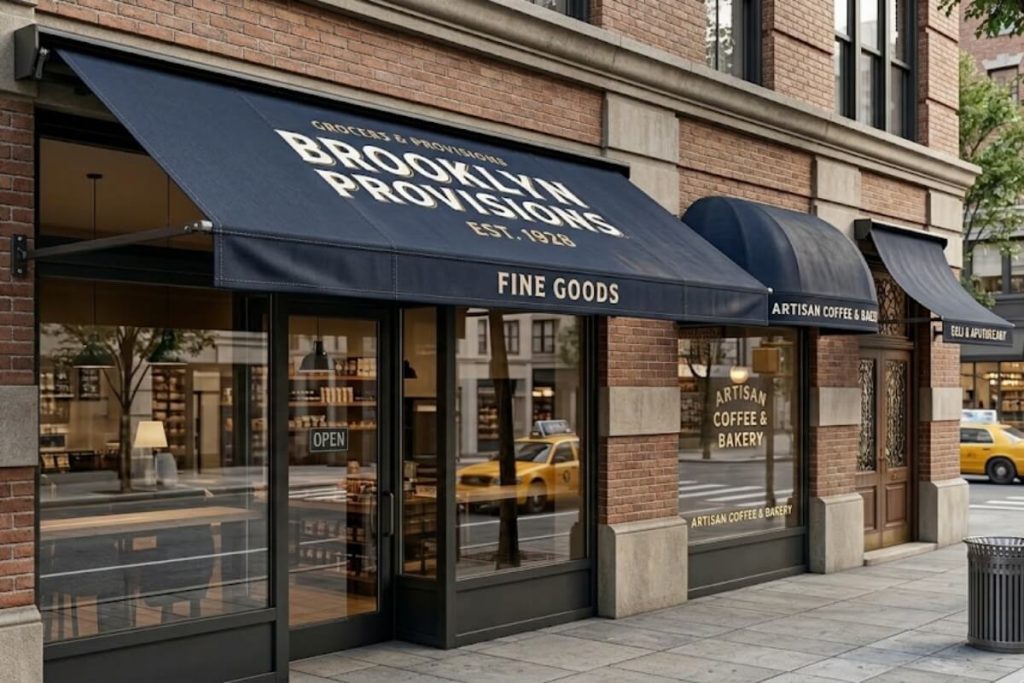
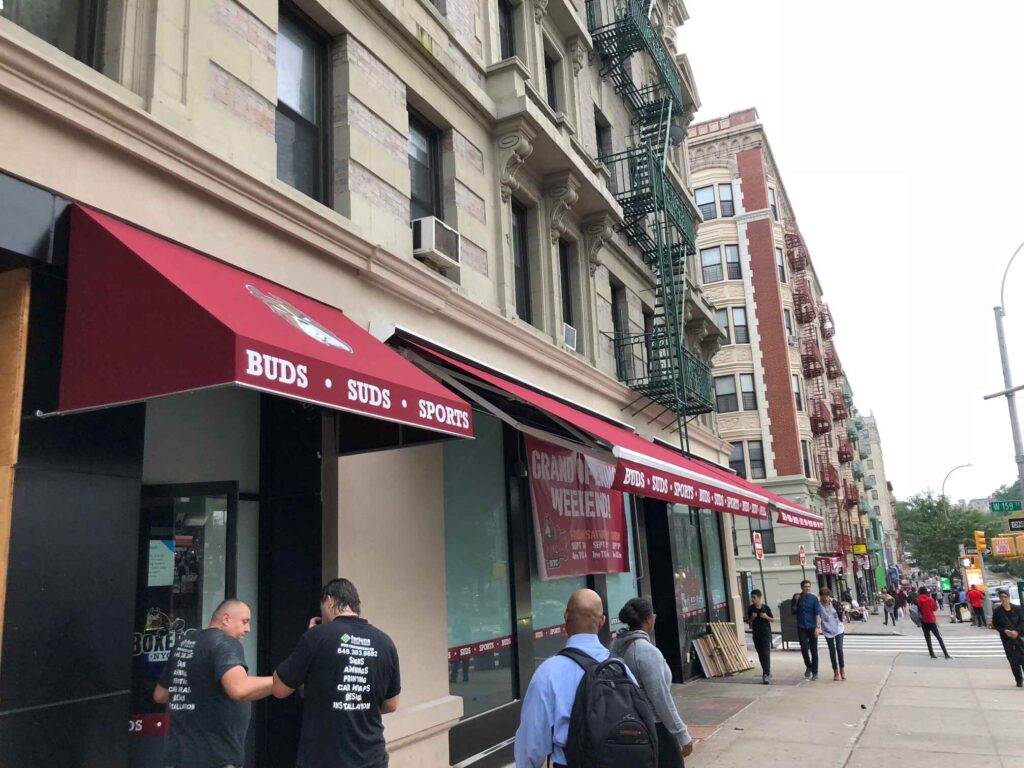
Fixed awnings are permanently attached to the building and cannot be retracted. They offer excellent durability and are the most common choice for storefronts, restaurants, and building entrances. Fixed awnings can be fabricated from canvas or vinyl and are available in multiple shapes including straight, waterfall, bullnose, and shed profiles.
Retractable Awnings
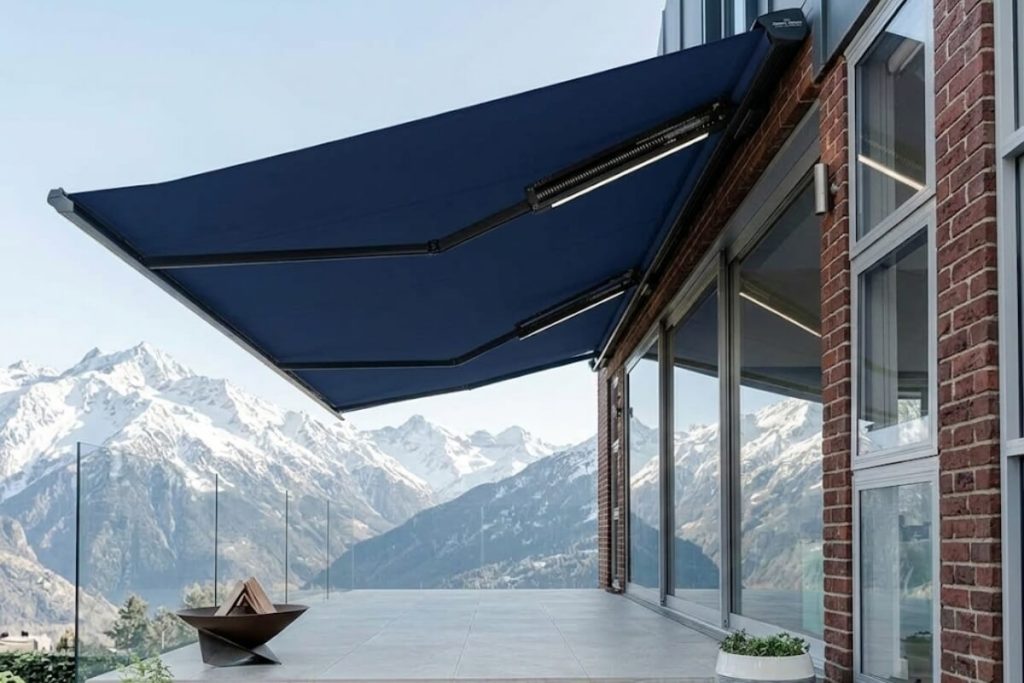
Retractable awnings can be extended during sunny or rainy weather and retracted when not needed or during strong winds. These systems are popular for restaurants with outdoor seating, hotels, and businesses that want flexibility. Signs NYC fabricates motorized retractable awnings that operate via wall switch or remote control.
Canopy Awnings
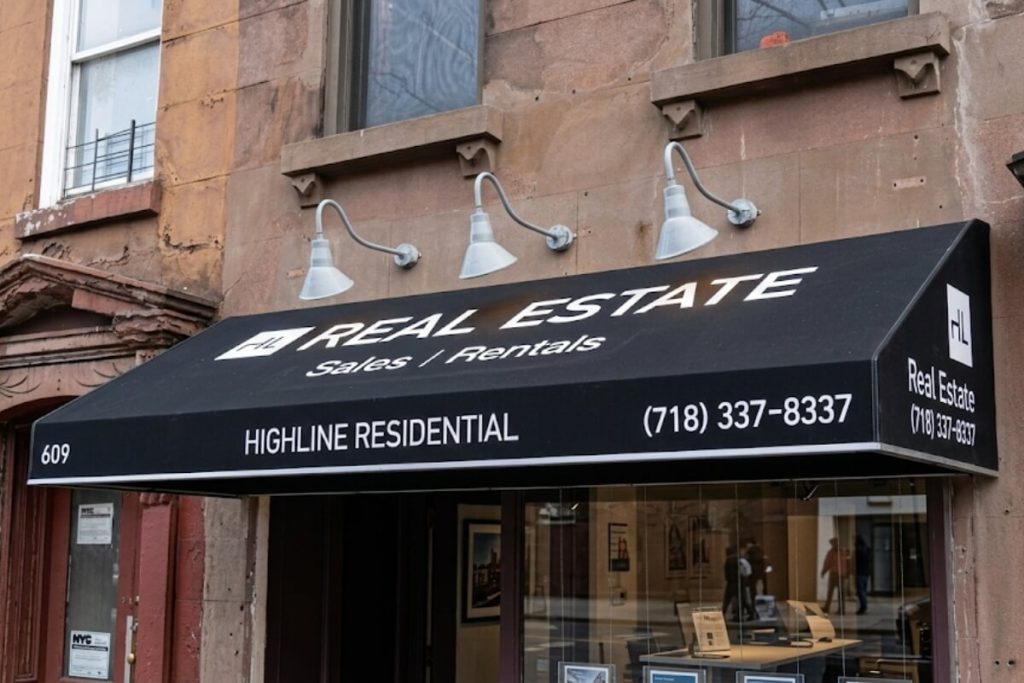
Canopy-style awnings extend across larger areas such as entrances, outdoor seating zones, or building lobbies. These installations require stronger structural support but create a highly visible and branded entryway. Hotels, restaurants, and office buildings often choose canopy awnings with integrated lighting to improve nighttime visibility.
| Awning Type | Best For | Lifespan | Maintenance |
|---|---|---|---|
| Fixed Canvas / Vinyl | Storefronts, restaurants, retail | 7–12 years | Annual cleaning; fabric replacement every 7–10 years |
| Retractable | Outdoor seating areas | 10–15 years | Annual mechanical inspection |
| Canopy | Hotels, building entrances | 10–20 years | Structural inspection every few years |
Designing an Awning That Promotes Your Brand
Your awning is not only a shading device — it is a powerful branding element. Positioned directly at eye level on the street, it represents your business day and night. The most effective commercial awnings display the business name, logo, and brand colors in a layout that remains readable from 30 feet or more away.
Fabric Color and Pattern
Solid colors communicate professionalism and typically make branding easier to read. Striped patterns can add personality but must be used carefully to avoid interfering with the logo. Darker colors absorb more heat but often provide better visual contrast against lighter building façades. Signs NYC designers work with premium awning fabrics from manufacturers such as Sunbrella, Dickson, and Sattler — brands known for durability and color stability.
Logo and Lettering Application
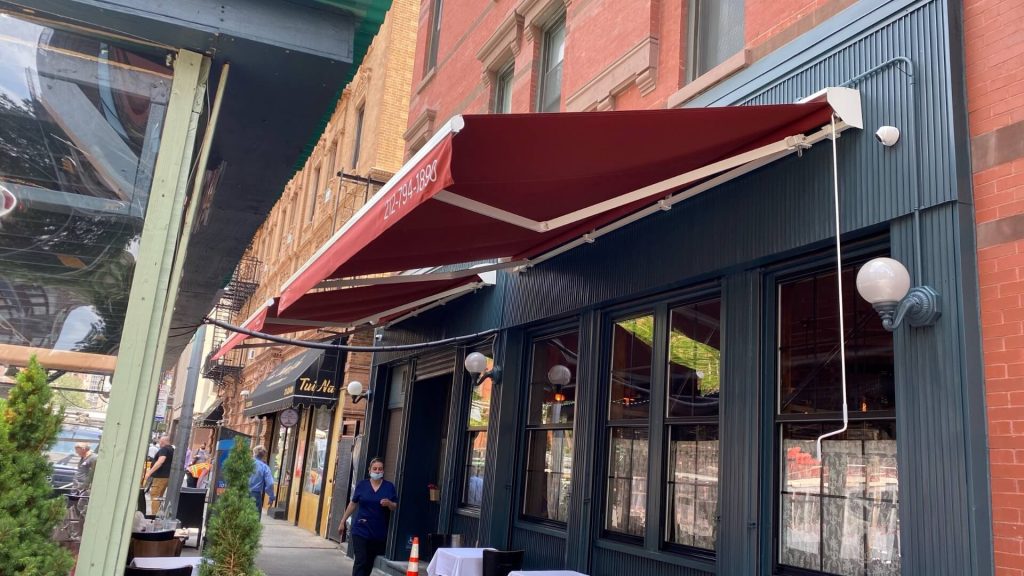
Logos and text can be applied to awning fabric using screen printing, digital printing, heat transfer, or appliqué embroidery. Signs NYC uses UV-resistant digital printing technology to ensure branding remains vibrant even after years of sun exposure.
Business Benefits of Commercial Awnings
Energy Cost Reduction
According to the U.S. Department of Energy, awnings can reduce solar heat gain by up to 65–77% on south- or west-facing windows. This can significantly lower air-conditioning costs during New York’s summer months.
Increased Curb Appeal and Foot Traffic
Retail studies consistently show that storefront awnings increase customer entry rates. A covered entrance signals professionalism and makes the business more inviting to pedestrians.
Outdoor Space Extension
Restaurants and cafés often use retractable or fixed awnings to cover outdoor seating areas, extending usable dining space during spring, summer, and fall. In a dense city like New York, additional seating space can dramatically increase revenue potential.
Protection From UV Damage
Direct sunlight can fade merchandise, damage displays, and degrade interior finishes. Awnings provide the first layer of UV protection, helping preserve interior assets.
Awning Permits in New York City
Installing an awning in NYC typically requires approval from the New York City Department of Buildings (DOB). Skipping the permit process can lead to violations, fines, or removal orders.
When Is a Permit Required?
Any awning that projects more than 18 inches from the building façade or includes illumination generally requires a permit. Signs NYC manages the entire permitting process for our clients.
Landmark Districts
If your property is located within a designated NYC Landmark District, approval from the Landmarks Preservation Commission (LPC) is also required. The awning’s fabric color, frame design, and placement must comply with preservation guidelines.
The Permit Application Process
Typical permit submissions include architectural drawings, structural details, mounting specifications, and contractor licensing documentation. Signs NYC is a fully licensed and insured sign and awning contractor authorized to file these applications on behalf of building owners.
Learn more here: How to Obtain an Awning Permit in New York City
Maintaining Your Commercial Awning
Commercial awnings in NYC are exposed to pollution, UV radiation, birds, and extreme seasonal weather. Routine maintenance significantly extends their lifespan.
Regular Cleaning
Fabric awnings should be brushed monthly to remove debris. A deeper cleaning with mild soap and water twice a year prevents mildew buildup. Pressure washing and bleach should be avoided because they damage protective coatings on awning fabrics.
Learn more here: How to Clean Your Awnings
Seasonal Inspection
Before winter, check for loose bolts, rust on the frame, and fabric tears. Retractable systems should be tested and lubricated at the beginning and end of each season.
Awning Refacing
If the frame remains structurally sound but the fabric has faded or torn, replacing only the fabric cover can restore the awning at a fraction of the cost of full replacement. 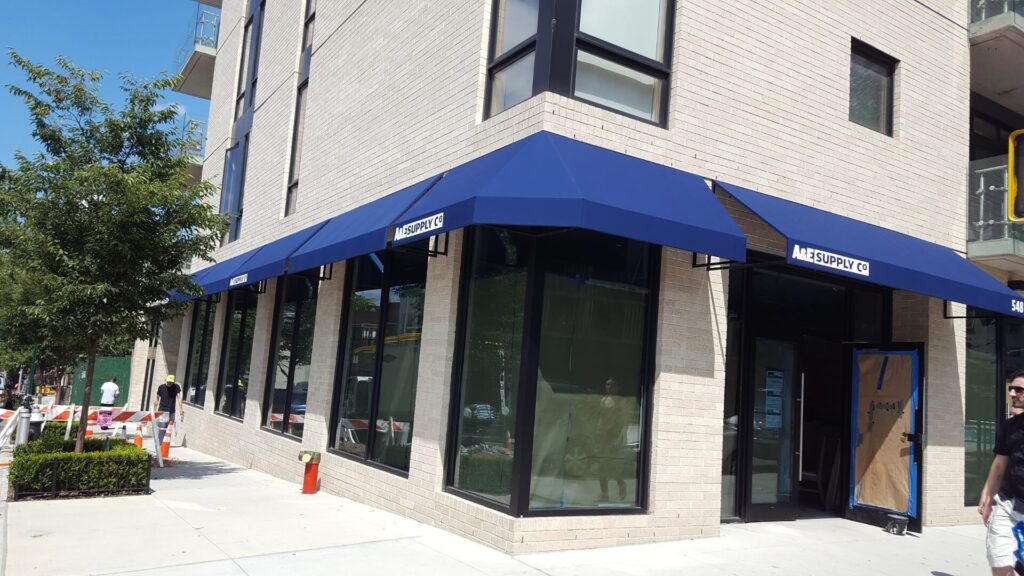
Choosing the Right Awning for Your Business
Every storefront, building façade, and brand identity is different. Selecting the correct awning involves evaluating your building structure, street exposure, branding needs, and long-term maintenance expectations.
Read our full guide: How to Choose the Right Awning for Your Business
You can also explore fabric selection in detail here: How to Choose Fabric for Your Outdoor Awning
Get a Free Commercial Awning Quote
Signs NYC designs, fabricates, permits, installs, and maintains commercial awnings across New York, New Jersey, and Pennsylvania. Our in-house team will create a custom awning solution that matches your brand and complies with local building regulations.

3 thoughts on “Commercial Awnings NYC: Types, Benefits, Permits & Design Guide”
Awnings are one of those products that does triple duty — branding, weather protection, and energy savings all in one. This guide covers the full picture really well. We’ve seen a big uptick in awning requests from Brooklyn businesses looking to upgrade their storefronts.
Great guide. The permitting section is especially useful because NYC awning permits can be surprisingly complicated. A lot of business owners don’t realize they need a permit until their sign installer tells them. Good to have all the info in one place.
We’ve been installing commercial awnings for over 25 years and this guide is comprehensive. The energy efficiency benefits are often overlooked — a well-placed awning can significantly reduce cooling costs in summer. It’s not just about curb appeal, it’s practical too.