
The Short Answer
- Two different numbers. The USDOT number is the carrier and is set by rule. The unit number is your own vehicle ID.
- Pick a scheme first. A type code plus a zero-padded sequence works for mixed fleets, per fleet numbering guides.
- Do not reuse numbers. Retire a number when the vehicle is sold, so histories stay separate.
- Letter it once. Set the number style and position before the wrap or lettering is ordered.
USDOT Number and Unit Number
The federal marking rule, 49 CFR 390.21, asks for the carrier name and the USDOT number on both sides. It also allows other identifying information if it is not inconsistent with the required marks. A unit number falls into that group. See USDOT numbers on trucks for the rule.
Pick a Numbering Scheme
Plain sequential numbers (001, 002, 003) are easy to assign and suit a small fleet of one vehicle type. Codes that combine a type and a sequence, such as VAN-014, help when you run several vehicle types. One fleet numbering guide suggests three-letter type codes and zero-padded sequences, with one person assigning the next number.
Habits That Keep It Clean
- Write it down. One page sets the type codes and who assigns numbers.
- Keep it short. Short numbers read larger from the same space.
- Retire, do not reuse. When a vehicle is sold, retire its number so two vehicles do not share one history.
- Match the register. Each unit number lines up with a plate, VIN and wrap date.
Where the Unit Number Goes
Put it near the front of both sides and on the rear. Use the same position on every vehicle of a type, so a driver in a yard finds it fast. Choose letter height by distance. On a published visibility chart, 4 inch letters read at about 150 feet and 6 inch at about 200. See truck lettering layout.
A Simple Fleet Register
| Unit | Type | Plate | VIN | USDOT line | Wrapped | Status |
|---|---|---|---|---|---|---|
| VAN-014 | Cargo van | On file | On file | Yes | Date | In service |
| BOX-007 | Box truck | On file | On file | Yes | Date | In service |
| TRL-003 | Trailer | On file | On file | Not applicable | Date | Retired |
A simple register keeps lettering, wraps and compliance in one place.
Ordering Lettering for a Fleet
Send the register, or a list of units with the numbers you want. We cut and apply numbers to match across the fleet. For brand rules across body types, read fleet branding standards. For methods that meet the marking rule, read DOT number stickers vs cut vinyl vs magnets.
We letter names, USDOT numbers and unit numbers across a fleet, and wrap them in waves.
Lettering from Our Shop
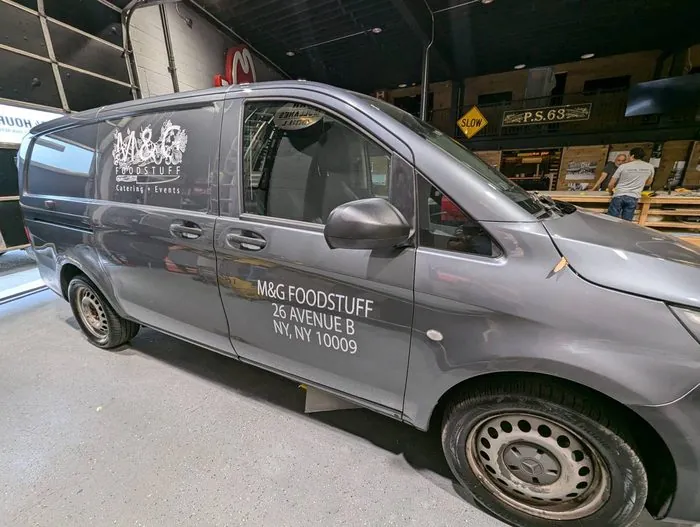
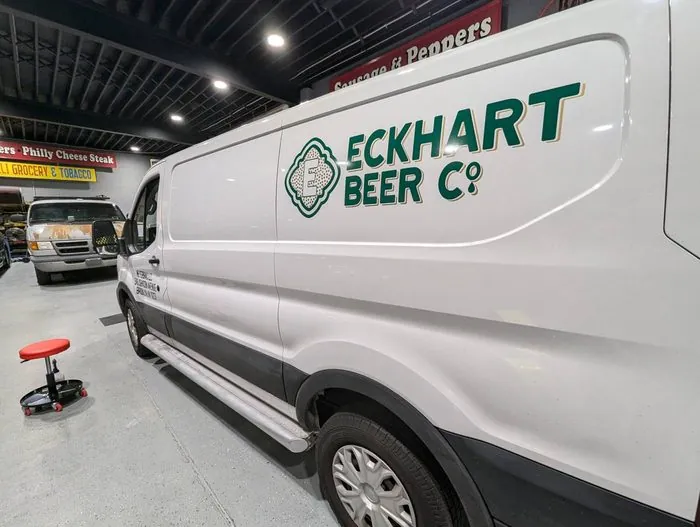
Send the vehicle types, counts and the numbers you plan to use. We send a lettering proof.
Fleet Unit Number Questions, Answered
Is a unit number required by law
The federal marking rule asks for the carrier name and USDOT number. A unit number is your own ID, which the rule allows if it does not conflict with the required marks.
What is the difference between a USDOT number and a unit number
The USDOT number identifies the carrier. A unit number identifies one vehicle in your fleet.
How should I number my fleet
Use a type code and a fixed-length sequence, such as VAN-014, and write the scheme down.
Should I reuse numbers from sold vehicles
No. Retire them so histories stay separate.
Where does the unit number go
Near the front of both sides and on the rear, in the same place on every vehicle of a type.
Can you letter numbers on many vehicles
Yes. Send the list and we match the style across the fleet.
Ask a Sign Maker
Setting up a numbering system? Send your vehicle types and counts. A project manager answers by email within one business day.

Abie S. writes for Signs NYC. Signs NYC has designed, built and installed signs, awnings and vehicle graphics in New York City since 1995, with shops in Brooklyn and Linden, NJ. About us
Sources and Further Reading
Rules
Numbering guides
- Heavy Vehicle Inspection: Fleet asset numbering and unit number standards
- Fleetio: Fleet naming conventions