
The Short Answer
- Sides: logo and one message in the upper two thirds. Keep it simple on a long surface.
- Rear doors: logo, one line and phone number, centered, with text off the seam.
- Required equipment: reflective tape, lights and reflectors stay exposed. A wrap works around them.
- Type: enclosed, cargo, concession and restroom trailers each need a different layout.
The Layout Map
A trailer side can run twenty feet or more, which is long enough that readers lose the thread. Anchor the logo at one end, add one message and let the rest breathe. A long run of text reads as noise.
What Goes Where
| Zone | What goes there | Notes |
|---|---|---|
| Side, upper two thirds | Logo, company name and one message | Largest surface. Seen from the next lane |
| Side, lower band | Phone number and web address, or leave plain | Road spray and the tape band sit here |
| Rear doors | Logo, one line and phone number | Center on the seam and keep text off latches |
| Front panel | Short brand line or logo | Seen by oncoming traffic |
| Tape and reflectors | Leave exposed | Required equipment. Do not cover it |
Reflective Tape, Lights and Reflectors
Federal rules require retroreflective sheeting, reflex reflectors or both on many trailers. Under 49 CFR 393.11, trailers 80 inches or more in overall width with a gross weight rating over 10,000 pounds built on or after December 1, 1993 need conspicuity treatment that meets FMVSS 108. The usual form is red and white tape.
A wrap must not cover it. We leave the existing tape exposed or reapply it, and we cut around lights and reflectors. Check the current text for your trailer with the trailer maker or your compliance contact.
Rear Doors and Seams
Rear doors carry the most eyes at a stoplight. Center the logo on the seam only if it reads across the gap, or place it on one door. Keep small text away from hinges and latches. For ribbed doors and rivet rows, see how a wrap handles rivets, ribs and roll-up doors.
Different Trailers, Different Layouts
Large logo, one message and a phone number. Simple and readable.
Plan around serving windows and awnings. See the food truck wrap guide.
Bold patterns or photos work well. Keep door numbers and signs clear.
How We Build a Trailer Wrap
- SurveyWe measure the sides, doors and front, and mark seams, ribs and equipment.
- DesignThe layout is built on a template of your trailer.
- Print and laminatePanels are printed and laminated for road use.
- InstallInstalled indoors, with relief cuts at ribs and rivets.
Surveys, design, print, lamination and installation in one place. Indoor facility, 3M Certified Vinyl Graphics Installers.
Trailers We Have Wrapped

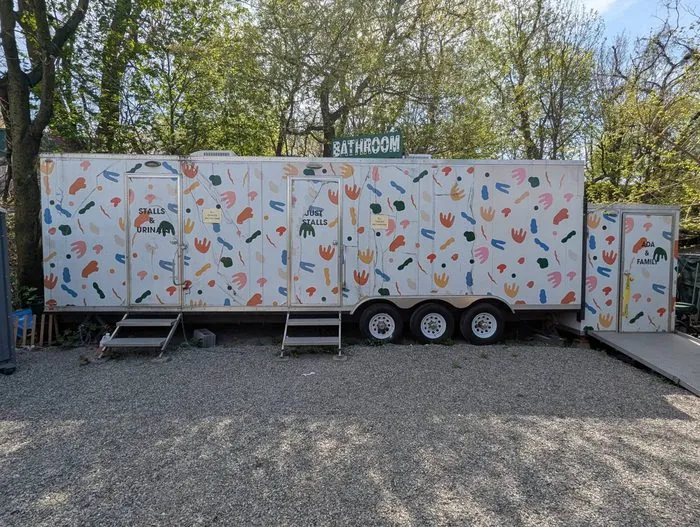
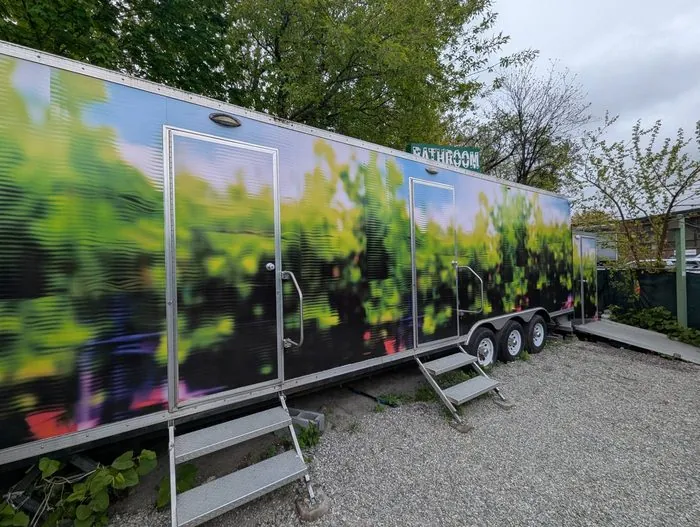
Send photos of the sides, rear doors and front, the length and your logo. We build a layout and send a quote.
Trailer Wrap Layout Questions, Answered
Where should the logo go on a trailer
Upper two thirds of the side, at one end, and again on the rear doors.
Can a wrap cover the reflective tape
No. The tape and reflectors are required equipment. We leave them exposed or reapply them.
Can you wrap the rear doors
Yes. We cut at the seam and keep text off the latches and hinges.
Do you wrap restroom and concession trailers
Yes. We plan around doors, windows and signs on the unit.
How big should the phone number be
Large enough to read from the next lane. On a published visibility chart, 6 inch letters read to about 200 feet and 12 inch letters to about 525 feet.
Do you wrap ribbed trailers
Yes. We use the right film and relief cuts at the ribs and rivets.
Ask a Sign Maker
Planning a trailer wrap? Send a photo of the trailer and your logo. A project manager answers by email within one business day.

Abie S. writes for Signs NYC. Signs NYC has designed, built and installed signs, awnings and vehicle graphics in New York City since 1995, with shops in Brooklyn and Linden, NJ. About us