
Most people shopping for channel letters end up choosing between two lighting styles. Front-lit letters send light out through the face. Halo-lit letters, also called reverse-lit or back-lit, send it backward onto the wall. The two are built differently, read differently at night, and suit different kinds of businesses and buildings.
How Each One Is Built
Front-lit. The letter is an aluminum can with a translucent acrylic face held on by a trim cap. LED modules inside point forward, and the whole face glows in your brand color.
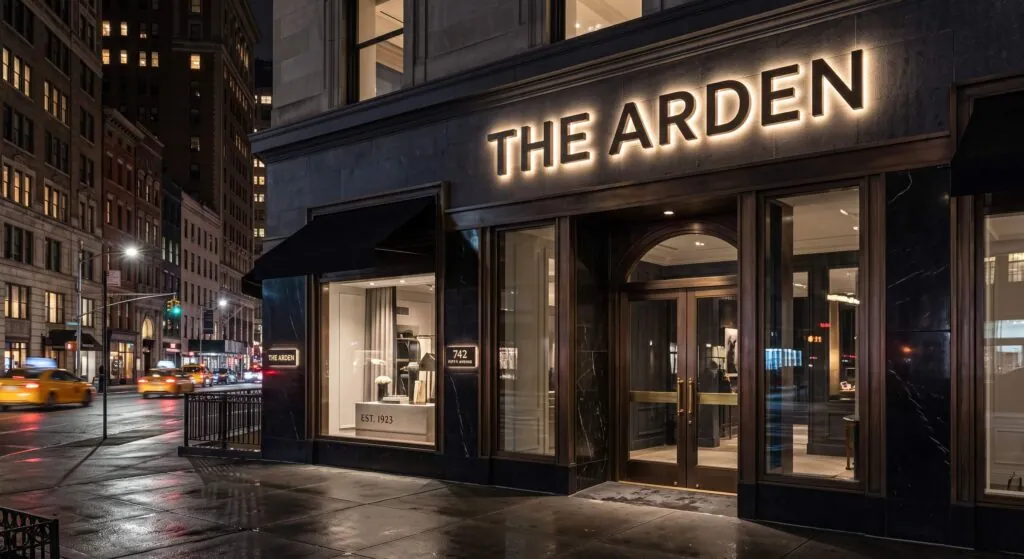
Halo-lit. The construction is flipped. The face and sides are solid metal, so no light comes through the front. The back of the letter is clear, and the letter is held off the wall on standoffs, typically an inch or two. The LEDs point backward and the light spills around the edges, outlining each letter with a glow.
How They Look, Day and Night
| Front-lit | Halo-lit | |
|---|---|---|
| At night | Bright, colored letter faces | Dark letter shapes outlined by a glow |
| By day | Colored acrylic faces with a visible trim cap | Solid metal letters, painted or brushed |
| Color comes from | The acrylic face or vinyl on it | The paint finish by day, the LED color at night |
| Overall impression | Bold, retail, high energy | Quiet, architectural, upscale |
Visibility and Legibility
If the goal is to be read from as far away as possible, front-lit letters win. A lit face in a strong color against a darker building is the easiest sign to pick out on a crowded block, and it holds up against the light from neighboring storefronts.
Halo-lit letters are read as silhouettes. That works very well at close and medium range, on quieter streets, and at building entrances. It works less well for a business that depends on being spotted from two blocks away or from a moving car.
The Wall Matters More Than You Expect
A halo-lit letter uses the wall as its screen, so the wall decides how good the sign looks:
- Light, matte surfaces such as painted stucco, limestone, or a matte backer panel give a smooth, even halo.
- Dark surfaces absorb the light and the glow shrinks.
- Glossy surfaces such as polished stone, glass, or glossy metal panels act like a mirror and can show the individual LEDs as dots.
- Uneven surfaces such as rough brick or deep mortar joints make the halo patchy.
When the wall is not suitable, the usual fix is a matte backer panel behind the letters. Front-lit letters have no such dependency and work on almost any surface. Mounting has its own trade-offs, covered in raceway vs. flush mount channel letters
Which Businesses Choose Which
Front-lit is the common choice for:
- Restaurants, delis, and quick service food
- Retail stores and pharmacies
- Gyms and urgent care clinics
- Any franchise whose brand standards specify lit faces
Halo-lit is the common choice for:
- Law, financial, and medical offices
- Boutiques and salons
- Hotels and residential buildings
- Corporate lobbies and building entrances
Cost
Halo-lit letters generally cost more than front-lit letters of the same size. The faces and sides are fabricated metal with a finished surface, the letters need standoff hardware, and installation is slower because each letter is mounted individually and spaced precisely off the wall. If the wall needs a backer panel, that is an added component. The full list of price factors is in our guide to channel letter cost in NYC
Landmark Buildings and Historic Districts
This is where the choice stops being a matter of taste. Under the Landmarks Preservation Commission’s signage rule, exterior signs on landmark buildings and in historic districts may not be internally illuminated, with one exception: they may be halo-lit. Signs can also be lit externally with small shielded fixtures.
In practice, a standard front-lit set is not something LPC staff can approve on a landmarked storefront, while halo-lit letters can be. If your address is in a historic district such as SoHo, Greenwich Village, or Brooklyn Heights, start with halo-lit or externally lit letters. More detail is in our guide to channel letter permits in NYC
Combination-Lit Letters
You do not have to choose. Combination-lit letters, sometimes called front/back-lit, have a lit face and a halo behind. The face carries the brand color and the halo separates the letters from the wall. They cost more than either single style and are used where the sign has to work hard and look refined at once.
Quick Decision Guide
Choose front-lit if you need maximum reach at night, your brand color has to show after dark, or the wall is dark, glossy, or rough.
Choose halo-lit if the look matters more than long-distance reach, the wall is light and matte, or the building is landmarked.
Choose combination-lit if you want both and the budget allows.
Frequently Asked Questions
Are halo-lit and reverse-lit channel letters the same thing?
Yes. Halo-lit, reverse-lit, reverse channel, and back-lit all describe letters with solid faces that light the wall behind them.
Can halo-lit letters be any color?
The letter itself can be painted any color. The glow is set by the LEDs, most often white or warm white, with colored and color-changing options available.
Which type is easier to maintain?
Front-lit letters are usually simpler to service, because the face comes off to reach the LEDs. Halo-lit letters are opened from the back or taken off their studs. See channel letter repair and maintenance
Do both types need a permit in NYC?
Yes. Both are illuminated signs and need Department of Buildings permits.
See Both Before You Decide
Signs NYC fabricates front-lit, halo-lit, combination-lit, and open-face letters and can show you finished examples of each on real storefronts. Browse the
channel letters page, or request a quote and tell us about your wall and your street.
