
The Short Answer
- Most commercial districts: a double-faced blade sign can project up to 18 in past the street line. Other signs, 12 in.
- Height: no higher than 25 ft above the curb in C1, C2, C3 and some C5 districts; 40 ft in C4, most C6 and C7.
- Permit: needed unless the sign is under 6 sq ft and not lit. Lit blade signs past the building line also pay a yearly DOB fee.
- Landmarks and some special districts have their own size and height limits.
Projection and Height
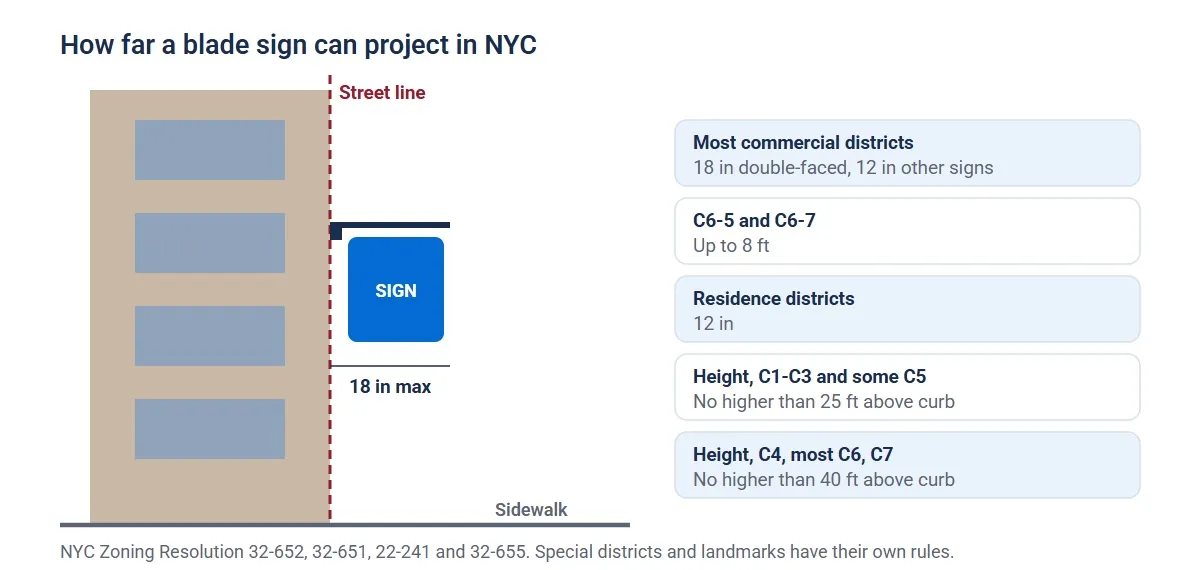
| District | Max projection past the street line | Max height above curb |
|---|---|---|
| C1, C2, C3 and C5-1, C5-2, C5-3, C5-5 | 18 in double-faced, 12 in other | 25 ft |
| C4, C5-4, C6 (most), C7 | 18 in double-faced, 12 in other | 40 ft |
| C6-5, C6-7 | 8 ft | No limit |
| Residence districts (R) | 12 in | Ground floor ceiling, max 20 ft |
Zoning limits come from Zoning Resolution sections 32-651, 32-652, 32-655, 22-241 and 22-242. Check your district on the city's zoning map before ordering.
Special Districts
Ground floor stores can have non-lit signs projecting up to 40 in, no larger than 24 x 36 in, below the first floor ceiling.
Some special districts, such as parts of Lower Manhattan, set their own blade sign rules. We check the address before design.
Signs on an awning are limited to 12 sq ft with letters up to 12 in, name and address only.
Permits
A DOB permit is needed for a business sign unless it is painted on the wall, or smaller than 6 sq ft and not lit. Most blade signs that are lit, or larger than 6 sq ft, need one. A lit sign also needs an electrical permit, and a lit sign that projects past the building line pays a yearly fee. See our guide to NYC sign permit cost and timeline.

Landmark Buildings
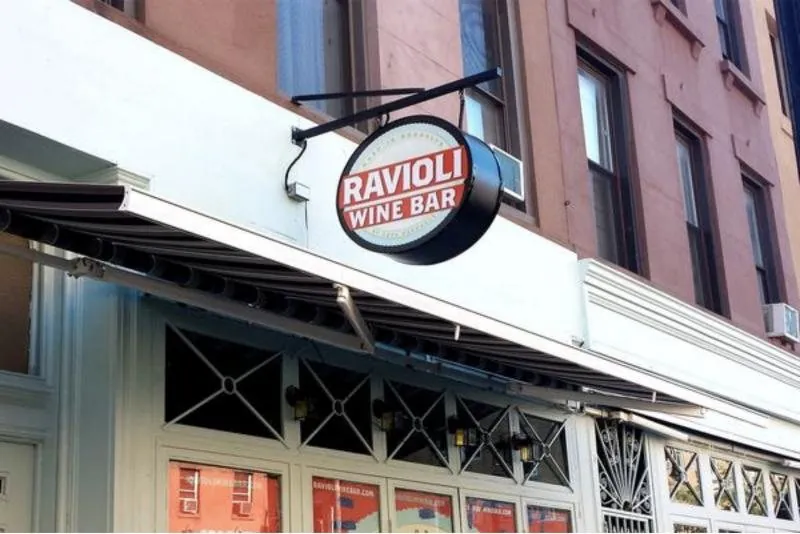
In a historic district or on a landmark, the Landmarks Preservation Commission must approve the sign before DOB issues the permit. LPC usually allows one bracket sign per store, mounted at the storefront level and anchored in mortar joints, not the masonry face. Our guide to LPC sign rules has the details.
Sizes That Work
| Use | Common size | Why |
|---|---|---|
| Small shop, non-lit | 24 x 24 in or smaller | Can stay under 6 sq ft and skip the permit |
| Restaurant or bar | 24 to 30 in round or square, lit | Reads from down the block at night |
| Tight zoning (12 in limit) | Slim vertical sign close to the wall | Fits within the projection limit |
Lit or Not Lit
Lit blade signs are usually double-faced light boxes or channel letters on a frame. Non-lit signs are painted aluminum, wood or carved HDU on a bracket. See our light box signs guide for single and double face options.
Send a photo of the storefront and the address. We check the zoning district and reply with blade sign sizes that fit and a price.
Blade Sign Questions, Answered
How far can a blade sign project in NYC?
In most commercial districts, 18 in past the street line for a double-faced sign and 12 in for other signs. C6-5 and C6-7 allow up to 8 ft.
How high can a blade sign be in NYC?
No higher than 25 ft above the curb in C1, C2, C3 and some C5 districts, and 40 ft in C4, most C6 and C7.
Does a blade sign need a permit in NYC?
Yes, unless it is smaller than 6 sq ft and not lit. Lit signs also need an electrical permit.
Is there a yearly fee for blade signs?
A lit sign that projects past the building line pays a yearly DOB fee based on its size.
Can I put a blade sign on a landmark building?
Yes, with LPC approval first. LPC usually allows one bracket sign per store.
Ask a Sign Maker
Have a question about a blade sign for your store? Send the address and a photo. A project manager answers by email within one business day.

Abie S. writes for Signs NYC. Signs NYC has designed, built and installed signs and awnings in New York City since 1995, with shops in Brooklyn and Linden, NJ. About us
Sources and Further Reading
NYC Zoning Resolution
- ZR 32-652: Permitted projection in commercial districts
- ZR 32-655: Height of signs
- ZR 32-653: Additional regulations for projecting signs