
Construction work can make streets and sidewalks unsafe. Open trenches, moving equipment, falling materials, and blocked walkways can put people at risk. Construction signs help keep the public safe by warning people about danger, showing safe routes, and marking areas where entry is not allowed. They also share important project details and contact information. In New York City, some construction signs are required by law. The signs needed depend on the type of work, the location, and the rules that apply to the project.
Why Are Construction Signs Important for Public Safety?
Construction signs help people understand what is happening around a work site. They give clear warnings and directions so people can make safer choices.
- Warn people about danger: Signs alert pedestrians to hazards such as open trenches, overhead work, and moving equipment.
- Guide pedestrians: Detour signs show people how to get around closed sidewalks and blocked entrances.
- Keep people out of unsafe areas: Restricted-area signs tell the public where they cannot enter.
- Share project information: Required signs help people identify the project and find the right contact details.
- Improve traffic safety: Roadwork signs warn drivers about construction and changes to traffic routes.
Signs work best when they are easy to read and placed where people can see them in time to respond. They must also be used with the barriers, fencing, and other safety measures required for the work.
Types of Construction Signs
Common construction signs include:
- Construction Warning Signs
- Danger Signs
- No Entry Signs
- Authorized Personnel Only Signs
- Pedestrian Detour Signs
- Sidewalk Closed Signs
- Roadwork Signs
- Traffic Control Signs
- Construction Project Information Signs
- Overhead Work Warning Signs
- Excavation Warning Signs
- Accessible Route Signs
The right signs depend on the work taking place and the risks around the site. Contractors should choose signs that match the actual conditions and follow the rules that apply to the project.
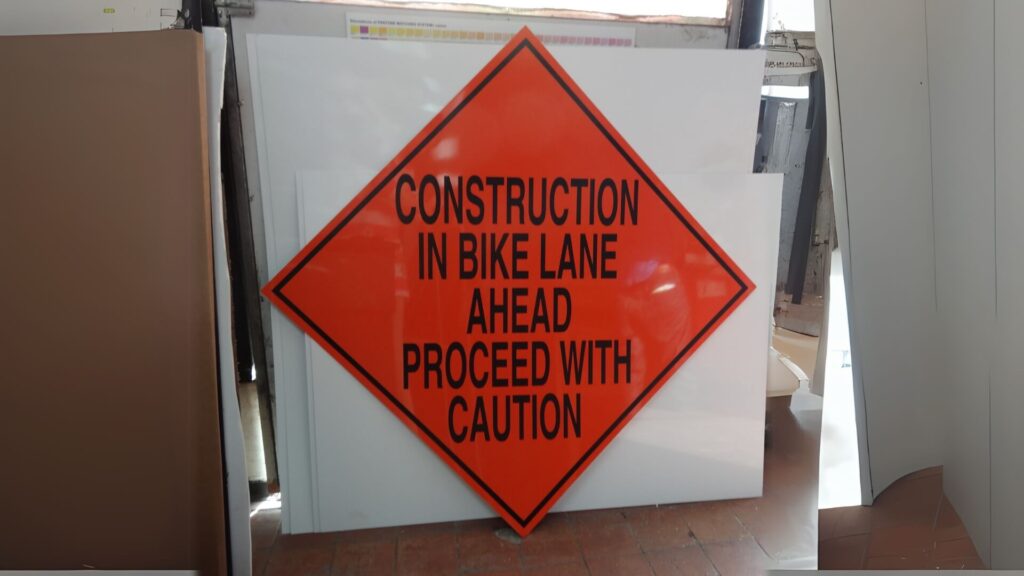
How Construction Signs Protect Pedestrians in NYC
New York City has busy sidewalks and narrow streets. Construction can block walking routes, change building access, and bring equipment close to public areas. Clear signs help people understand these changes before they reach the work zone.
Warning People About Sidewalk Closures
When construction blocks a sidewalk, signs can warn pedestrians before they reach the closed section. Other signs can guide them along an alternate route. NYC311 says sidewalk construction sites must generally provide a walkway at least five feet wide, either on the sidewalk or within a protected path in the street. Signs alone do not make a route safe. The walkway must also meet the rules that apply to the project.
Keeping People Away From Construction Hazards
Open trenches, heavy equipment, and overhead work can create risks for pedestrians. Warning signs help people recognize these hazards and stay away from unsafe areas. Contractors must also use proper barriers, fencing, and protective structures where required. A warning sign cannot replace physical protection.
Helping People Find the Right Entrance
Construction may block a building’s usual entrance. Directional signs can point people toward another entrance or an available accessible route. Contractors should update these signs when site conditions change. Outdated directions can confuse people and lead them toward closed or unsafe areas.
What Makes a Construction Sign Easy to Read?
A construction sign must be clear and easy to understand. People may only have a few seconds to read it as they pass the site.
- Use simple words: Keep messages short and direct.
- Choose clear lettering: Make text large enough to read from the intended distance.
- Use strong contrast: Make the text stand out from the background.
- Place signs carefully: Keep them visible and away from obstructions.
- Choose durable materials: Use materials suited to outdoor conditions and the length of the project.
- Keep signs in good condition: Repair or replace signs that are damaged, faded, or loose.
NYC DOB also requires applicable construction signs on temporary protective structures to remain readable and securely attached. Signs must not have sharp edges or protruding nails that could hurt someone.
NYC Construction Sign Rules Contractors Should Know
New York City has specific rules for construction and demolition signs, sidewalk sheds, and certain street-work projects. Not every project follows the same requirements.
NYC Department of Buildings Requirements
The NYC Department of Buildings (DOB) sets rules for signs at construction and demolition sites under Construction Code Section 3301.9. Depending on the project, signs may need to show the property owner’s details, contractor information, project details, and required contact numbers. Contractors should check the current rules before ordering signs to make sure the required information is included.
Read the NYC DOB construction site signage requirements.
NYC Department of Transportation Requirements
The NYC Department of Transportation (DOT) has separate rules for certain street-work projects. Qualifying projects expected to last three months or longer may need construction project information signs. The requirements depend on the type of work and the permits involved. Contractors should confirm which rules apply before choosing a sign format.
Read the NYC DOT construction project sign requirements.
Keep Signs Updated
Signs should remain readable and accurate throughout the project. Contractors should check for damage, blocked messages, loose panels, and outdated contact details. If a sidewalk closes or a detour changes, the signs should be updated to show the correct route. Clear, current information helps people move around the site more safely.
Common Construction Sign Mistakes to Avoid
Poor signage can confuse people and make hazards harder to recognize. Contractors should avoid these common mistakes:
- Placing signs where people cannot see them.
- Using long or confusing messages.
- Giving pedestrians conflicting directions.
- Leaving damaged or faded signs in place.
- Displaying outdated project information.
- Relying on signs instead of required barriers or fencing.
- Missing information required by NYC rules.
Checking signs regularly helps contractors find and fix these problems before they create confusion.
How to Choose the Right Construction Signs
The right signs depend on the type of work and the people who may pass the site.
Before ordering construction signs, contractors should check a few important details:
- Purpose: Decide whether the sign needs to warn people, show a detour, restrict access, or share project information.
- Wording: Keep the message short and clear.
- Size and placement: Make sure people can read the sign from the intended viewing distance.
- Material: Choose a material that suits the weather, location, and project length.
- Mounting: Make sure the sign can be attached securely and safely.
- Local rules: Check the NYC DOB, DOT, permit, and project requirements that apply.
- Maintenance: Plan to inspect signs and update them when site conditions change.
Planning these details before production can help reduce mistakes and avoid the cost of reprinting signs that do not meet the project’s needs.
Get Construction Signs for Your NYC Project
Clear construction signs help protect pedestrians, guide people around work zones, and share important project details. The right signs should be easy to read, securely installed, and suited to the work taking place. At Signs NYC, we produce construction signs for contractors, builders, property owners, and project managers across New York City and New Jersey. Our team handles sign production in-house and can help prepare signs based on your project needs. Tell us what signs you need, how many you need, and where they will be used. Request a Quote or call 718-453-8300 to discuss your construction signage project.
