
A Work in Progress sign tells people that construction, renovation, or other work is taking place at a property. In New York City, some projects also require a specific construction site information panel with details about the project, owner, contractor, and safety reporting. The correct sign depends on the type of work and the permits involved. A general warning sign does not replace a required NYC Department of Buildings (DOB) information panel or a Department of Transportation (DOT) project sign. This guide explains the main sign requirements, standard sizes, required content, placement rules, and material options for construction projects in NYC.
What Is a Work in Progress Sign?
A Work in Progress sign informs people that work is underway at a building, construction site, or other property. It can warn pedestrians about nearby activity, identify a project, or direct people away from an unsafe area.
Depending on the project, a site may need more than one type of sign. Common examples include:
- Work in Progress Signs
- Construction Warning Signs
- Danger Signs
- No Entry Signs
- Authorized Personnel Only Signs
- Pedestrian Detour Signs
- Sidewalk Closed Signs
- Construction Project Information Panels
These signs serve different purposes. A warning sign alerts people to a hazard, while a project information panel provides official details about the work. Contractors should check which signs their project requires before ordering.
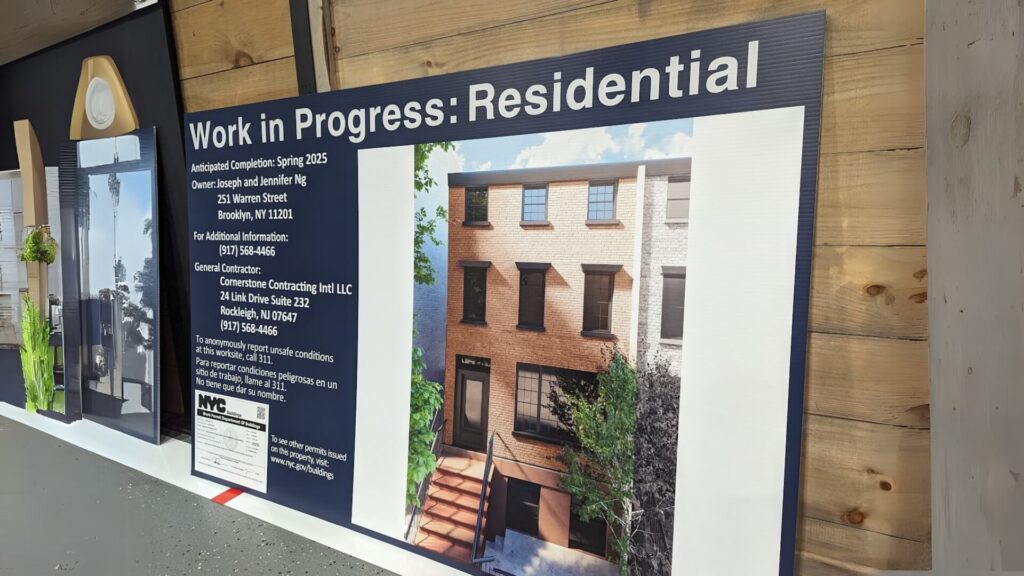
NYC Work in Progress Sign Requirements
New York City has specific rules for construction site signage. The requirements depend on the type of project, the permit, and where the sign will be installed.
Construction Fence Project Information Panels
NYC Building Code Section 3301.9.1 covers project information panels on construction fences for applicable construction and demolition projects. These panels must display required project details and follow the city’s rules for size, content, and placement.
A standard project information panel is not simply a sign that says “Work in Progress.” It must contain the information required by the applicable code section.
Signs for Smaller Residential Projects
Certain one-, two-, and three-family dwelling projects may qualify for different signage provisions. The standard construction fence panel requirements should not automatically be applied to every residential job. Before ordering, confirm the project’s classification and the signage requirements that apply to its permits.
NYC DOT Construction Project Signs
Some projects permitted by the New York City Department of Transportation have separate project information sign requirements. These signs are used for qualifying street, road, and other public infrastructure projects. DOT signs follow their own rules for dimensions, design, content, and placement. Do not assume that a DOB construction fence panel and a DOT project sign use the same specifications.
What Size Should a Work in Progress Sign Be?
There is no single size for every Work in Progress sign in NYC. The correct dimensions depend on whether the sign is a required construction fence information panel, a DOT project sign, or a general temporary warning sign.
Standard Construction Fence Information Panels
For applicable construction fence projects, NYC Building Code Section 3301.9.1 specifies the following panel dimensions and exceptions:
- Standard construction projects: 6 feet wide by 4 feet high.
- Demolition projects: 2 feet 4 inches wide by 4 feet high.
- Construction sites with street frontage under 60 feet: 55 inches wide by 36.5 inches high, subject to the applicable code provisions and exceptions.
These dimensions apply to the relevant project information panels, not every temporary construction warning sign. Check the current code and project requirements before approving the final size.
NYC DOT Project Information Signs
For projects covered by the DOT project information sign program, the standard sign measures 2 feet 4 inches wide by 4 feet high. The DOT specifications also cover colors, lettering, and materials. If your project falls under the DOT program, follow its official sign specifications instead of using the dimensions for a standard DOB construction fence panel.
Choosing a Size for a General Warning Sign
For supplementary warning signs, choose a size that allows people to read the message before reaching the work area. Consider the viewing distance, lighting, pedestrian traffic, and available mounting space. These general considerations do not replace any minimum dimensions or other requirements that apply to a regulated sign.
What Information Must a Work in Progress Sign Include?
The information required on a NYC construction site panel depends on the applicable code section and project type. Under the relevant construction fence provisions, a project information panel must include specific details about the work.
Required information can include:
- Work in Progress heading: The heading must identify the intended zoning use, such as residential, commercial, retail, office, or hospital.
- Building image or diagram: The panel must include the required building rendering, elevation drawing, or zoning diagram where applicable. Demolition projects have an exception.
- Expected completion date: The anticipated completion date for the project.
- Property owner details: The owner’s corporate name, address, and telephone number.
- Project information contact: A website address or phone number that people can use to obtain project information.
- General contractor details: The contractor’s corporate name and telephone number. Demolition projects have separate provisions for the demolition contractor.
- 311 safety-reporting statement: The prescribed statement in both English and Spanish.
- Primary project permit: A copy of the primary project permit, along with the required notice directing people to NYC Buildings for other permits.
The permit copy must be protected as required, such as in a laminated or plastic covering, unless it is printed directly on the panel. Check the current NYC Building Code for the exact wording, layout, and any exceptions that apply to your project.
What Should a General Work in Progress Sign Say?
A supplementary warning sign can use a short, direct message. Examples include:
- Work in Progress
- Construction Area
- Authorized Personnel Only
- Sidewalk Closed
- Pedestrian Detour
- Danger: Overhead Work
Use wording that matches the actual condition at the site. For example, a sidewalk closure sign should not direct pedestrians into an active work zone. These general notices do not replace the required information panel or official traffic-control signs.
Where Should a Work in Progress Sign Be Placed?
Sign placement affects both visibility and compliance. Required panels must be installed in the locations specified for the applicable project, while supplementary warning signs should be positioned where people can see and understand the message before reaching a hazard.
Construction Fence Placement
Under NYC Building Code Section 3301.9.1.2, applicable project information panels must be posted on the construction fence along each perimeter facing a public thoroughfare. Additional panels are required at every corner when a qualifying perimeter is more than 150 feet long. The specified mounting height is 4 feet above the ground, measured from the ground to the bottom edge of the panel. Required panels must remain posted while the construction fence remains in place, subject to the applicable code provisions.
DOT Project Sign Placement
For projects covered by the NYC DOT project information sign program, signs must be installed according to DOT’s placement rules. These include a mounting height between 2 and 8 feet above the ground. For qualifying major road or bridge work, signs may be required at both the beginning and end of the work area, with at least one sign on each segment. Always consult the current DOT requirements for the specific project.
Placement Tips for Additional Warning Signs
For general temporary warning signs, keep these points in mind:
- Place signs where people can see them before reaching the work area.
- Keep messages visible from the direction pedestrians or drivers approach.
- Avoid blocking signs with equipment, materials, parked vehicles, or other notices.
- Keep signs out of pedestrian travel paths and accessible routes.
- Secure signs so they cannot fall or become a hazard in strong wind.
- Use separate directional signs when people need to follow a detour.
These are practical recommendations for supplementary signs. They do not replace required mounting heights, locations, or traffic-control rules.
Which Materials Are Best for Work in Progress Signs?
Outdoor construction signs must withstand rain, wind, sunlight, dirt, and regular contact. The right material depends on the sign type, installation method, and how long the sign will remain in place.
- Aluminum: A rigid option for durable outdoor signs and longer-term use.
- Rigid plastic: A lightweight option for many temporary notices.
- Vinyl: Useful for printed signs and applications where a flexible material is suitable.
For regulated NYC construction fence panels, the material must meet the applicable code requirements, including durability, weather resistance, and flame resistance. Confirm the specifications before production.
How to Make a Work in Progress Sign Easy to Read
A construction sign should communicate its message quickly. People may only have a few seconds to read it while walking or approaching the work area.
- Use a clear heading that describes the work or hazard.
- Choose a readable font and strong contrast between text and background.
- Keep warning messages short and direct.
- Use consistent spacing and a clear information order.
- Make sure required details are readable at the intended viewing distance.
- Keep the sign clean and replace damaged or faded panels when necessary.
For official project information panels, follow the required format and content rather than removing information to make the design simpler.
Common Work in Progress Sign Mistakes
Construction signage can become ineffective when the sign is poorly designed, incorrectly placed, or missing required details. Avoid these common mistakes:
- Using the wrong sign type: A general warning sign does not replace a required DOB or DOT information sign.
- Choosing the wrong dimensions: Sign sizes can differ by project type and applicable code provision.
- Leaving out required information: Missing owner, contractor, permit, or safety-reporting details can create compliance problems.
- Installing the panel incorrectly: The required public-facing fence locations and mounting height must be followed.
- Blocking pedestrian access: Signs and supports should not create an additional obstruction or hazard.
- Using unsuitable materials: Signs that deteriorate outdoors may become difficult to read or unsafe.
- Ignoring sign condition: Faded, loose, damaged, or obscured signage should be addressed.
- Assuming one rule covers every project: DOB, DOT, residential, demolition, and protective-structure requirements can differ.
How to Order Work in Progress Signs in NYC
Before ordering construction signage, confirm the project type, permit requirements, installation location, and expected duration. If the project needs a regulated information panel, collect the required project details before sending the artwork for production.
When requesting a quote, provide:
- The type of sign required.
- The required dimensions or applicable specification.
- The quantity needed.
- The installation location and mounting method.
- The required text, artwork, or project information.
- The intended installation date.
These details help the sign maker confirm the scope, materials, and production requirements before manufacturing begins.
Order Construction Signs for Your NYC Project
Signs NYC produces custom signs for businesses, contractors, property managers, and construction projects. If you need Work in Progress signs, construction warning signs, or project information panels, share your project details and required specifications so the right sign can be planned. Request a Quote or call 718-453-8300 to discuss your construction signage needs.
Official NYC Resources
- NYC Department of Buildings: Construction Site Signage Requirements
- NYC Department of Transportation: Construction Project Informational Signs
Note: Sign requirements vary by project type, permit, and site conditions. Confirm the current NYC Building Code or DOT requirements before ordering or installing regulated construction signage.
